| |
| Thursday, 08 October 2026 |
| The Body as a Place : The Sculpture of Anthony Gormley |
| Anna Moszynska |
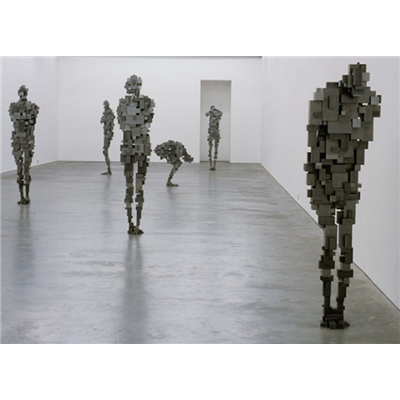 |
Antony Gormley is probably best well-known for his iconic ‘Angel of the North’, imposingly situated beside the A1 near Gateshead. However, this 20-metre high landmark sculpture is just one of a host of memorable pieces that he has created during the course of a prolific career that already spans over four decades. Having known Gormley since he was a student at the Slade and written two books on the artist’s drawings, I review the development of this major British sculptor from a unique perspective. In the context of his work overall, I examine his continuous fascination with the body as a place – both of experience and of interaction with its surroundings. Anna is a London-based lecturer and writer specialising in contemporary art. During the 1990s, she oversaw the development of the subject as the first Master’s Degree at Sotheby’s Institute. She has also taught at other institutions in London including The City Lit, the Royal Academy and Tate, as well as lecturing in cities ranging from Dubai to New York and Berlin to Sydney. She continues to offer guest lectures on the Sotheby’s Institute MA in Contemporary Art. Apart from the many catalogue essays she has written on living artists, many of whom are women, her books include Abstract Art (1990, enlarged ed. 2020) and Sculpture Now(2013), both published by Thames & Hudson, and two books on the drawings of Antony Gormley, whose work she has curated at MACRO, the Museum of Contemporary Art in Rome. She enjoys introducing art to audiences in a lively and approachable way to make modern and contemporary art both accessible and interesting. |
|
| Thursday, 12 November 2026 |
| Modern Masters of Painting - Paul Cezanne and Paul Gauguin |
| Joshua White |
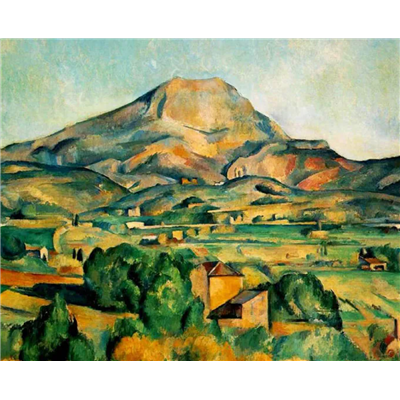 |
After the Impressionist group stopped exhibiting in 1886, two artists who had shown work with fellow Impressionists, both left Paris and to pursue highly individual visions for making art. Paul Cézanne returned to his native Provence, to paint the landscapes, people and objects on his family estate in seclusion. His paintings almost defy the possibility of looking at them because they appear to oscillate without a traditional finish and focus. Why did these paintings have such a large influence on the Cubists and younger artists? Picasso described Cézanne as 'father of us all', recognising how his emphasis on the formal nature of painting nudged making pictures away from realism toward a newfound sensory experience. Paul Gauguin by contrast was restless, looking for a place to develop his expressive and subjective paintings that began to depart from the obligation to observe in favour of conveying intuition and emotion. Moving from an artist's colony in Brittany to Van Gogh's 'studio of the south', Gauguin finally travelled to French Polynesia in the naive quest to find a 'primitive' society that remained authentic and honest where he could inspiration and a principal subject. This lecture compares two of the most influential artists of the 19th century and illustrates how they prepared the ground for modern painting. Joshua White is an enthusiastic and experienced art historian and speaker who specialises in 19th and 20th century European and American art, international contemporary art, photography, design and architecture. T He taught for 20 years at the college of Christie's auction house. He is also a former BBC journalist, Joshua is also a founder and presenter of The Art Channel, an online project documenting and interpreting art exhibitions and artworks in museums and commercial galleries. Joshua has worked as the Director of Hamiltons Gallery between 2018 and 2020 specialising in 20th Century photography. At Hamiltons, he exhibited and represented Don Mccullin and the estates of Richard Avedon, Irving Penn, Helmut Newton and Herb Ritts. Elsewhere, he has lectured at numerous institutions, galleries and colleges around the world and has led cultural tours abroad to visit Berlin, the Venice Art Biennale and the Documenta in Kassel, Germany. In the UK, he has led groups to visit Bristol, Cambridge, Chichester, Liverpool and Oxford. In 2026, Joshua will be leading tours abroad for Kirker Cultural Tours and ACE Cultural Tours. On television and radio, Joshua has been a contributor to Channel 5’s ‘Great Paintings of the World with Andrew Marr’, BBC Radio 4’s ‘Behind The Scenes’ and BBC Radio 3’s ‘Turning Picasso' and as a writer, Joshua has written several exhibition catalogues. Please note this is a change to our published programme. |
|
| Thursday, 10 December 2026 |
| Messiah: an Audio-Visual Exploration of Handel’s Choral Masterpiece |
| Raymond Holden |
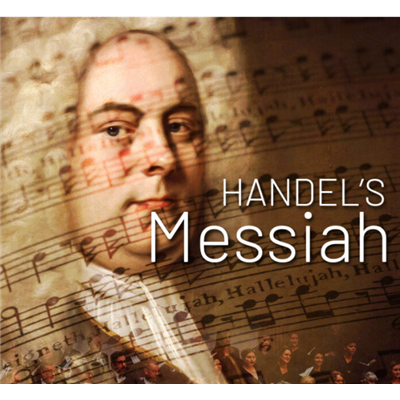 |
Composed in 1741 and first performed at Dublin's Great Music Hall the following year, 'Messiah' is one of Western music's greatest artistic achievements and a work that has captured the imagination of audiences around the globe. Although originally performed at Easter, the oratorio has also become a staple at Christmas and is regularly performed by some world's greatest conductors, singers, choirs and orchestras during that part of the liturgical calendar. But, over the years, the piece has been subject to a variety of cuts, changes and modifications that have reflected shifting trends in both performance style and audience expectations. Born in Australia, Professor Raymond Holden AM studied at Sydney, Cologne and London and is both a critically acclaimed and a multi-award winning writer, conductor, broadcaster and lecturer. He has performed with the Philharmonia Orchestra, the Danish Radio Symphony Orchestra, the BBC Symphony Orchestra, the Orchestra of the Emilia Romagna and the New Symphony Orchestra of London, and has been published regularly by Oxford, Cambridge and Yale University Presses, the Royal Academy of Music Press, Hans Schneider Verlag (Vienna) and by ICA, EMI and Warner Classics. Professor Holden has appeared on BBC Television and Radio, Servus TV (Germany), RAI Television and Radio, ABC Classic FM, 3MBS FM, Vision Australia Radio, SRF (Switzerland) and Classic FM (South Africa), and has spoken at many of the world’s leading music and literary festivals, universities, conservatoires and research institutes. He was appointed a Member of the Order of Australia (AM) in the 2019 Queen’s Birthday Honours List and is currently Emeritus Professor of Music at the Royal Academy of Music, London. |
|
| Thursday, 14 January 2027 |
| Tahiti, the Enduring Image 1767-1920 |
| Simon Keable-Elliott |
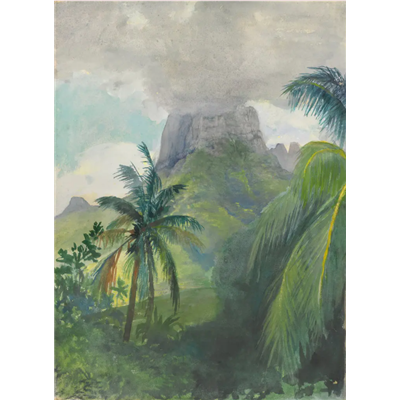 |
The first Europeans writers and artists who visited Tahiti in the 1760s came back talking about an island paradise. Writers such as Herman Melville, Robert Louis Stephenson, Pierre Loti and Somerset Maugham; and artists such as Charles Giraud, John La Farge and Paul Gauguin kept the image created by the artists who accompanied Captain Cook - William Hodges and John Webber, going for 150 years; but what was it about Tahiti, the time it was 'discovered' and the popularity of certain writers and artists that made Tahiti so unique? A graduate of Durham University, Simon was Head of Politics and Director of Model United Nations at Royal Russell School for 25 years. He now works as a writer, researcher, and lecturer. His first book Utterly Immoral, Robert Keable and his scandalous novel was published in November 2022, and he had also written articles for The Church Times, The History News Network, The Beresford Family Society Magazine, The Journal of the Society for Army Historical Research, and Genealogy Today. He is a regular speaker at events run by The Arts Society, Western Front Associations, U3As and Family History Societies. |
|
| Thursday, 11 February 2027 |
| The World of Homer |
| James Renshaw |
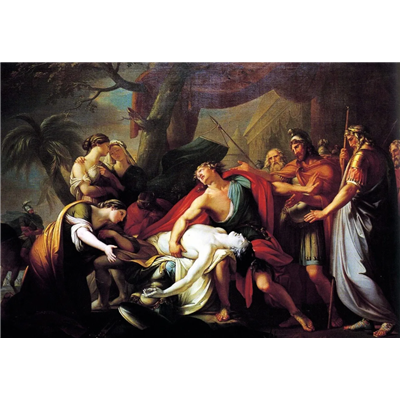 |
This talk examines the history and cultural legacy of the two earliest works in the western literary canon: the Iliad and the Odyssey. After an outline of each plotline, the talk will focus on how and why these poems have cast such a spell on artists and writers ever since, from ancient Greek tragedy and vase painting, through renaissance artists such as Botticelli and Bernini, and up to modern authors such as James Joyce and Madeleine Miller. Understanding the world of Homer is an essential element for understanding the history of western art. In the 16th and 17th centuries, Spain rose as the great European superpower with an empire spanning the globe. This vast wealth, alongside the renewed catholic fervour of the counter reformation kickstarted the Spanish siglo d’oro – literally the century of gold - the great flourishing of painting, sculpture, literature and music. James's talk explores this period, looking at the historical moment and vast array of art before focusing in on the work of the greatest painter of the age, Diego Velázquez. Following a degree in Classics from Oxford University, James Renshaw taught Classics in Secondary schools, publishing a number of textbooks related to the classical world, including In Search of the Greeks and In Search of the Romans. He has also lectured for the V&A Academy, most recently on its Art and the City: Antiquity to Renaissance course. He is also been a Council Member for the Hellenic Society and the Roman Society. He is a keen traveller and photographer of ancient sites, a number of which have been used in his books. He is currently working on a book The Marathon: an Epic History which seeks to chart how stories from the battle of Marathon in 490 BC led to a new 'marathon' event at the first modern Olympics in 1896, and how this event has gone on to become a sporting craze. |
|
| Thursday, 11 March 2027 |
| Iconoclasm and the Art of Destruction |
| Aliki Braine |
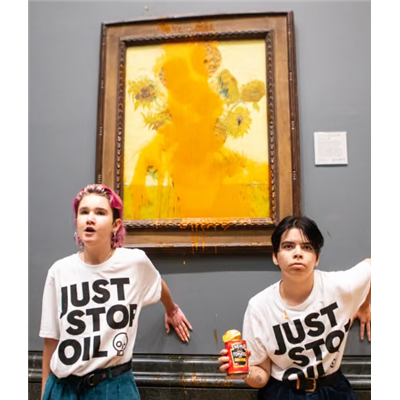 |
The most significant proof of the power of art is the fact that some people feel the need to destroy it. Attacks and acts of destruction have gone on for as long as art has existed, from the iconoclastic riots of the Protestant Reformation to climate protesters’ defilement of historical paintings in national museums. This lecture will explore artworks that have survived despite attacks, the appeal of ruins and the practice of using destructive strategies to create art. Born in Paris in 1976, Aliki Braine studied at The Ruskin School of Fine Art, Oxford, The Slade School of Fine Art, London and The Courtauld Institute where she was awarded a distinction for her masters in 17th century painting. After working for National Gallery for 20 years, she now teaches for Christie’s Education and the Wallace Collection, and is an Associate Lecturer for the Camberwell College of Art, University of the Arts London. Aliki is also a practicing artist who regularly exhibits her photographic work internationally. |
|
| Thursday, 08 April 2027 |
| Courts and Courtesans |
| Andrew Prince |
 |
Andrew Prince knew he wanted to create jewellery from being a small child. In 1987, Andrew started work in London’s Bond Street, working for The Antiques Roadshow expert Ian Harris. Under his guidance, Andrew developed an appreciation for jewels that were valued for their quality of design and craftsmanship, rather than for how much the stones in the piece were worth. He then joined the renowned contemporary jeweller Elizabeth Gage and worked with her on the design and production side. Elizabeth Gage was to have an enormous influence on Andrew's sense of what was possible within the realm of jewellery design. Andrew's taste for fine 'costume jewellery' can be traced back to antique markets, when he realised that beautiful jewellery didn't require expensive stones, and that it was the elegance of the design and the quality of the workmanship that truly mattered. Private commissions for celebrities such as Michael Jackson and Shirley Bassey followed. In 2002, the V&A commissioned a collection of jewels to accompany the resplendent Tiaras, Past and Present exhibition which became one of their most popular exhibits. In 2005, he was asked to make tiaras and jewellery for Mrs Henderson Presents and then in 2009 The Young Victoria. In 2012, he was chosen by the creators of Downton Abbey to supply a large collection of jewellery including elegant tiaras, combs, earrings and necklaces designed and created by him. |
|
| Thursday, 13 May 2027 |
| Visual Magic in the Musicals |
| Christopher Budd |
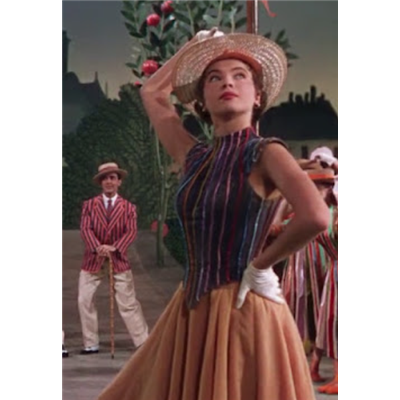 |
The true pioneers of visual effects in the movies were the musicals. In the glory days of the studio system Fred Astaire and Gene Kelly were involved in an artistic arms race to put the most ingenious dance routines on screen. Join writer, teacher, and composer Christopher Budd for an appreciation of blue screens, rotating stages, and two extraordinarily talented men. Christopher Budd is a writer, teacher, and musician, with a specialism in music for film. His research interests range from silent cinema to electronic music via Hollywood from the studio system to the experimental ’70s, and British and European film and music of the 1960s and 70s, as well as special effects, movie posters, and fashion on film. He lectures for various community arts and adult learning organisations including The WEA, U3A, many local groups within the Cambridgeshire Alliance of Lifelong Learners, and further afield including the French and Italian film clubs at the Letchworth Settlement and the Kings Lynn Film Festival and Cinema Club. Christopher has written on diverse topics for publications including EMC Media Magazine, Music Teacher, Classical Music, Bass Guitar Magazine, and US record-collecting bible Goldmine, and contributes regularly to music magazine Shindig!, penning a monthly column on album covers. He also teaches private instrumental lessons and records as a session musician. |
|